Brand & Identity · Wendy · 8 min
A good logo matters. A lot. But many hotels assume a logo is all it takes to have a brand, while guests size you up on so much more. This is what they're looking at, and how to tell whether your brand says the same thing everywhere.
When someone tells me their hotel “already has a brand,” they almost always show me the logo. I get it: it's the most visible thing, the one on the front of the building, on the website and on the breakfast cups, and it's the face people recognize you by. But a face needs a personality behind it. That personality is the brand, and guests pick up on it in everything they find about you.
Think about how you choose a hotel. You look at a few photos, read a couple of lines, check the reviews, maybe open Instagram. Within minutes you have a feeling: “this is for me” or “not quite.” The logo is there, helping you remember the name, but the feeling comes from the whole picture. That whole picture is your brand identity, and it's something you can build. I'll walk you through what it's made of, using a hotel whose brand we created, and then it's your turn, with a quick test for your own.
A logo sums up your brand in a single mark. Behind a good one are decisions about lettering, shape and spacing, about how it reads tiny on a key tag and huge on a façade. That's why it's so hard to get right, and why it sticks. Brand identity is the whole system the logo belongs to: the idea of who you are, turned into something people can see, hear and feel. It includes the logo, plus the colors, the typefaces, the photos, the way you write, the scent and the music in the lobby, even the paper of the note you leave in the room.
They need each other. A great logo with a muddled brand behind it loses its power, while a clear brand gives the logo meaning every time someone sees it. When both are done well, people recognize the brand even with the name covered. That's a good test, by the way: if you took your logo off a photo or a post, would anyone know it was you?
Before they arrive, guests have already experienced your brand in miniature: on your website, on Google, in a review, in the confirmation email. From all of that, three impressions stay with them, even if they never put them into words:
The photos, the colors, the type, the layout. When everything fits, it says care. When every piece goes its own way, it looks rushed.
The tone of your website, your posts, your reply to a review. Whether it sounds like you or like a template.
What they sense about the stay: calm or lively, simple or ceremonial. It's what decides whether they can picture themselves there.
When all three line up, guests trust you. When they contradict each other (luxury photos, bargain-bin copy, curt replies to reviews), doubt creeps in. And people with doubts keep looking at other hotels.
Your logo is the face of your brand. Your identity is everything a guest feels when they see it.
When we build an identity, we always start with the idea and end with the details. This is the order:
What's yours and no one else's. Not “luxury” or “charm,” which everyone claims, but something concrete you can deliver every single day. Everything else grows from here.
Together they distill the idea into a mark. The logo has to read well on a key tag and on a façade, stick at first glance and carry the brand's character. It's the most visible part of all, which is exactly why it gets so much care.
The first thing people notice, even from across the street. A few, well chosen and always the same.
How you write and how you speak. The same on your website, in a WhatsApp message and in a reply to a bad review.
They should show what it's like to be there, not just what the place looks like. Shot with a look people come to recognize as yours.
A signature scent the moment you walk in, the right music for every hour of the day, the feel of the sheets, the weight of the paper, the materials of your signage. It's the part of a brand that never makes it into photos, and the part people remember most: you can forget a hotel's name and still remember, years later, how its lobby smelled.
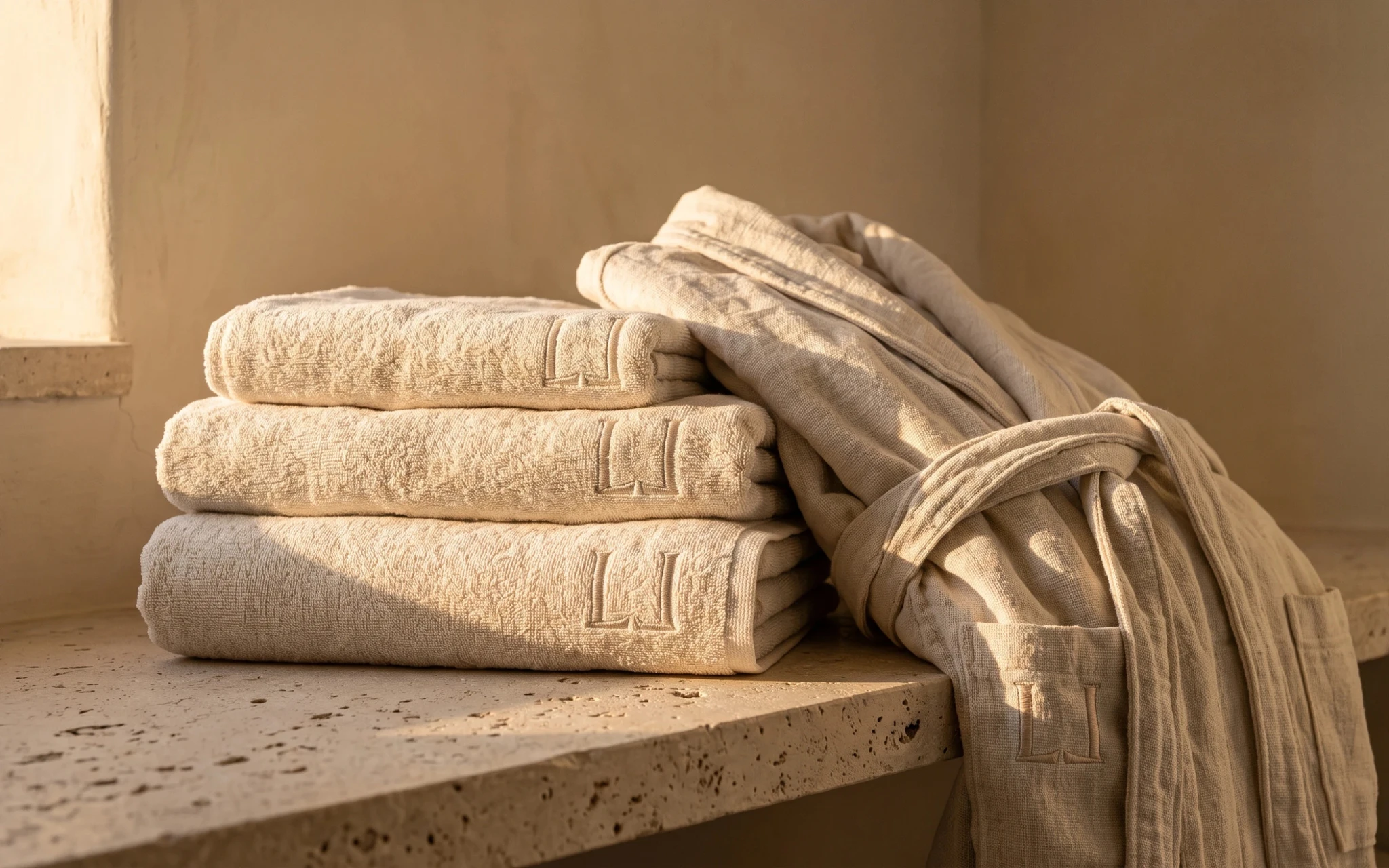
The key, the welcome note, the towels, the menu. This is where everything comes together, and the brand stops being a promise and becomes something guests can hold in their hands.
None of these pieces has to be spectacular. What makes a brand strong is that they all pull in the same direction.
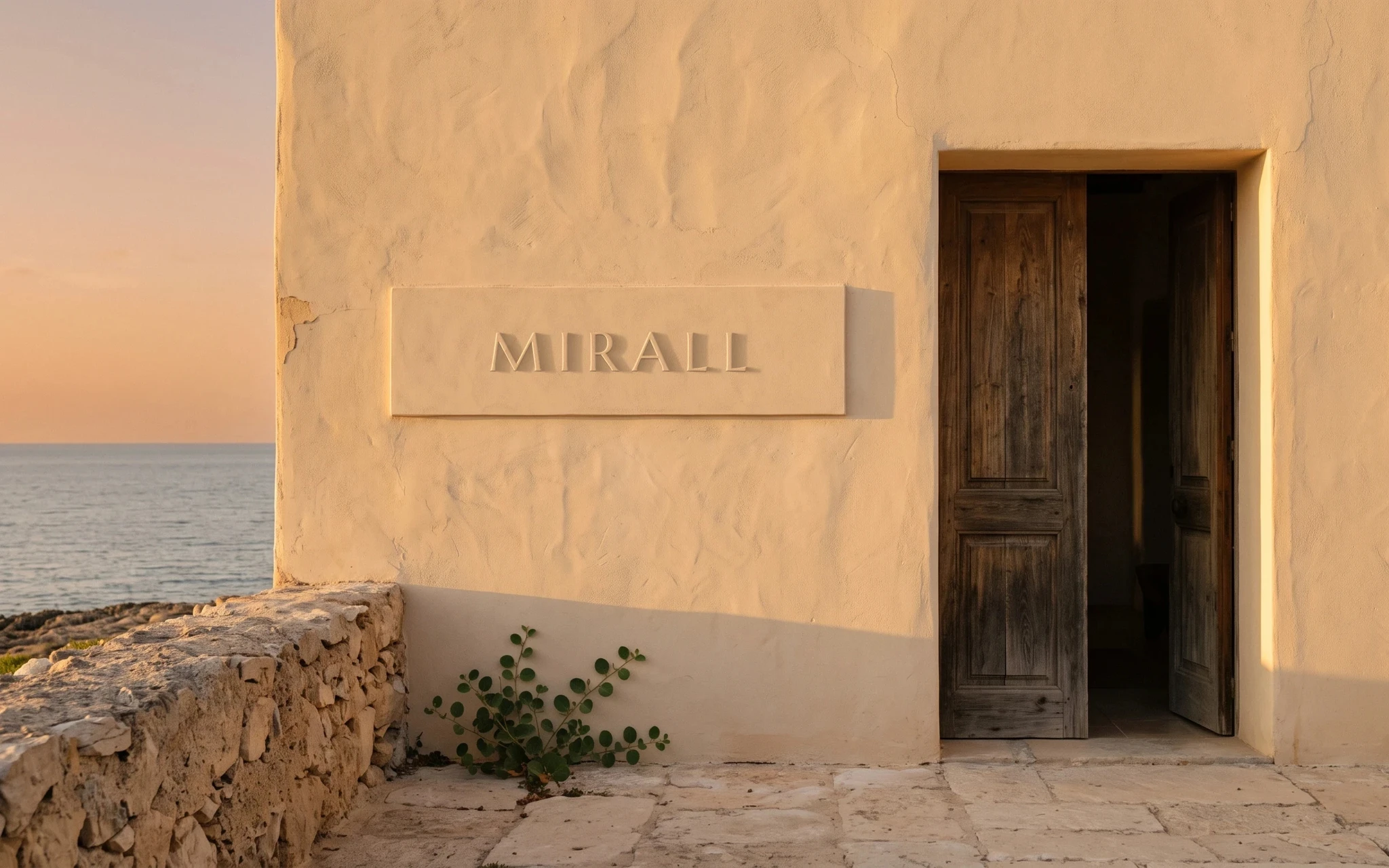
Mirall is a boutique hotel whose identity we created at Rielto House. It has twelve rooms, all facing west, on a limestone coastline. That's where the brand idea came from: Mirall is the hotel at the edge of the day, the one that saves you the best hour, the one at sunset.
With an idea that clear, the rest almost fell into place. The colors come from sun-warmed stone and the deep wine red of nightfall. The logo is the name in Roman capitals, as if carved in stone, with no flourishes, and the symbol is two L's facing each other like a reflection on water: “mirall” means “mirror” in Catalan. It's applied in relief, the same color as the surface, because Mirall never raises its voice.
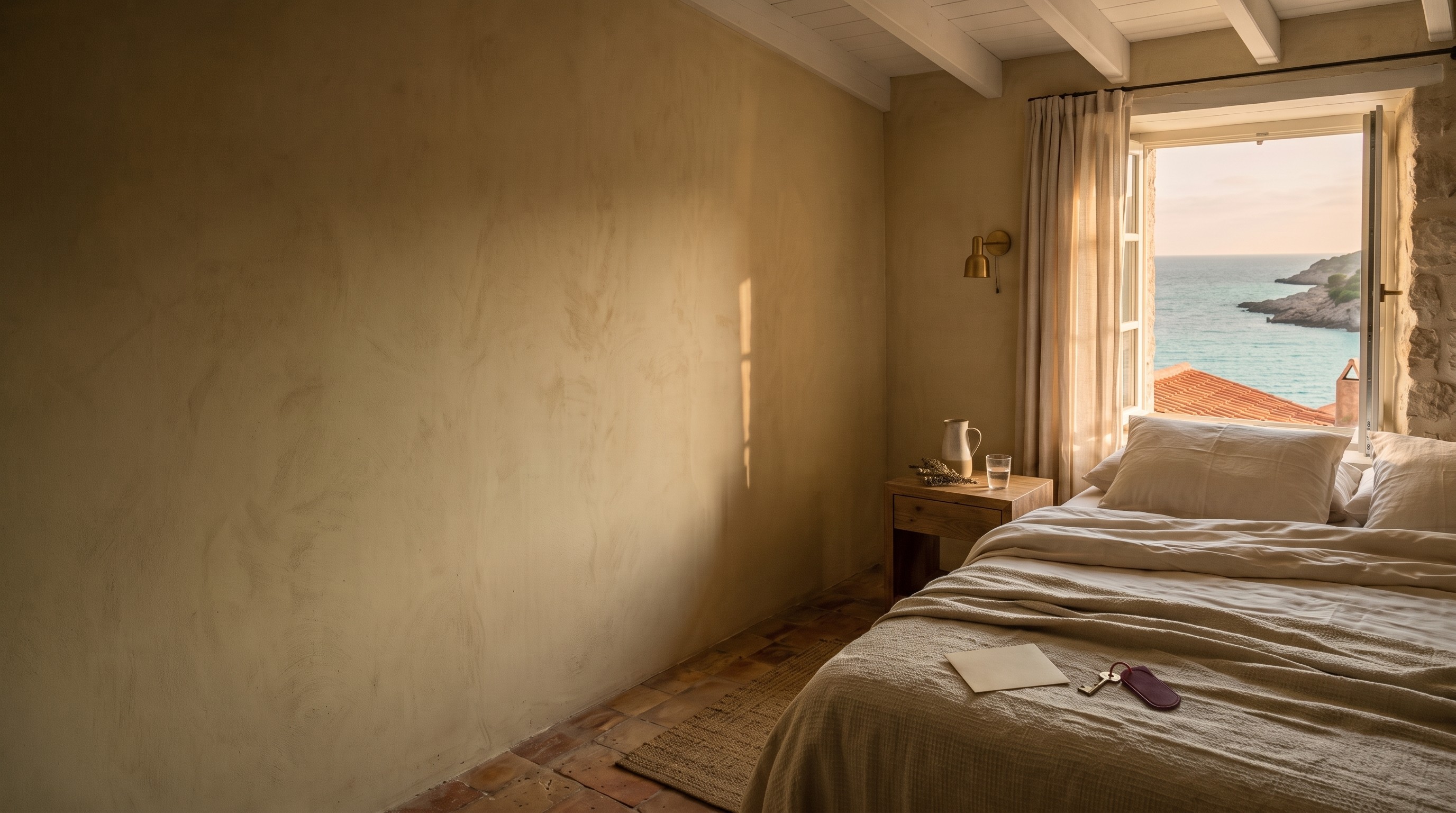
But the brand really comes through in the details. When guests reach their room, there's a note waiting on the windowsill: “We've saved you the best hour of the day. It begins at 8:14 p.m.” The sign for the door handle reads “Shh. Your hour has begun.” These details don't even carry the logo, and yet they couldn't belong to any other hotel.
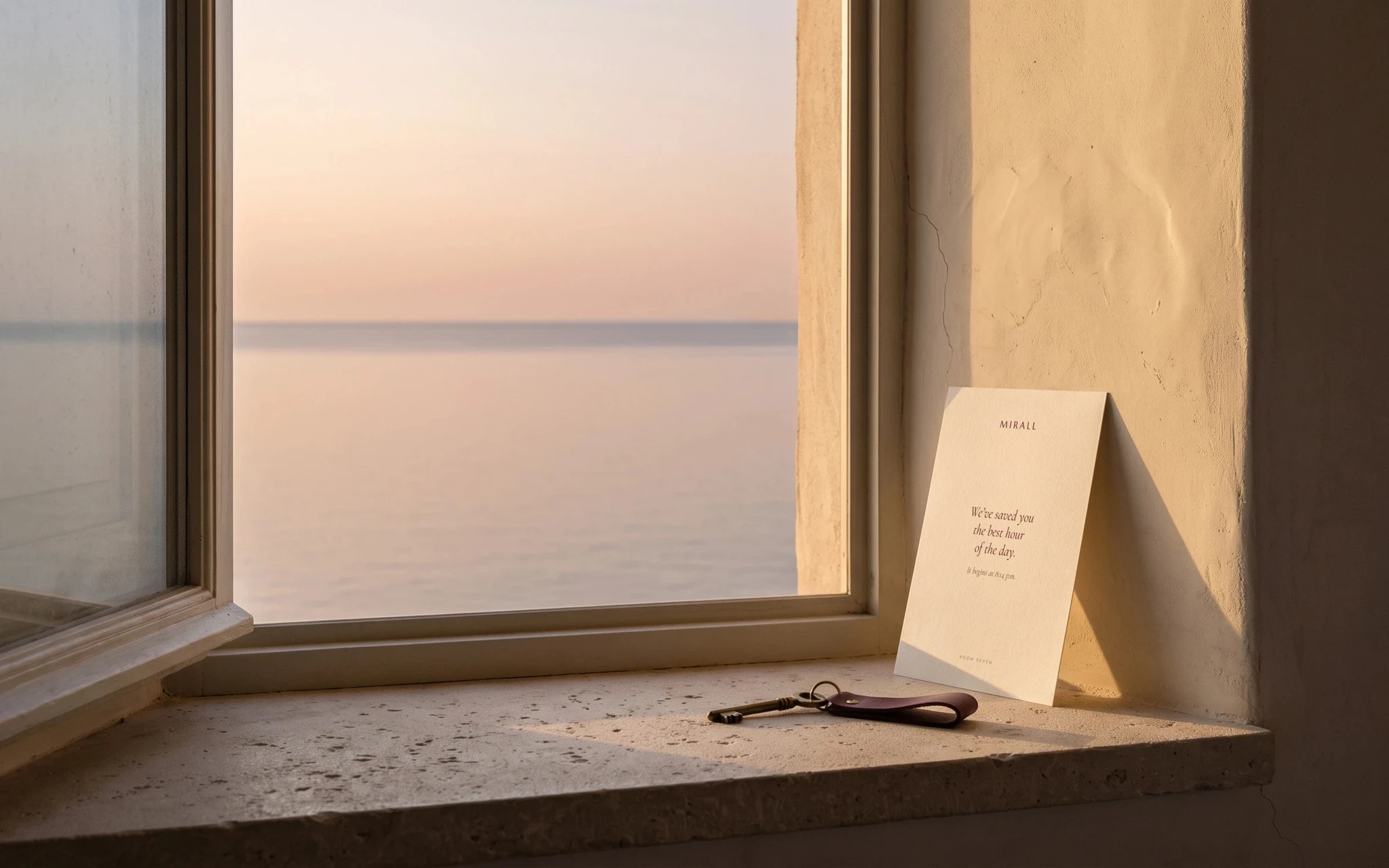
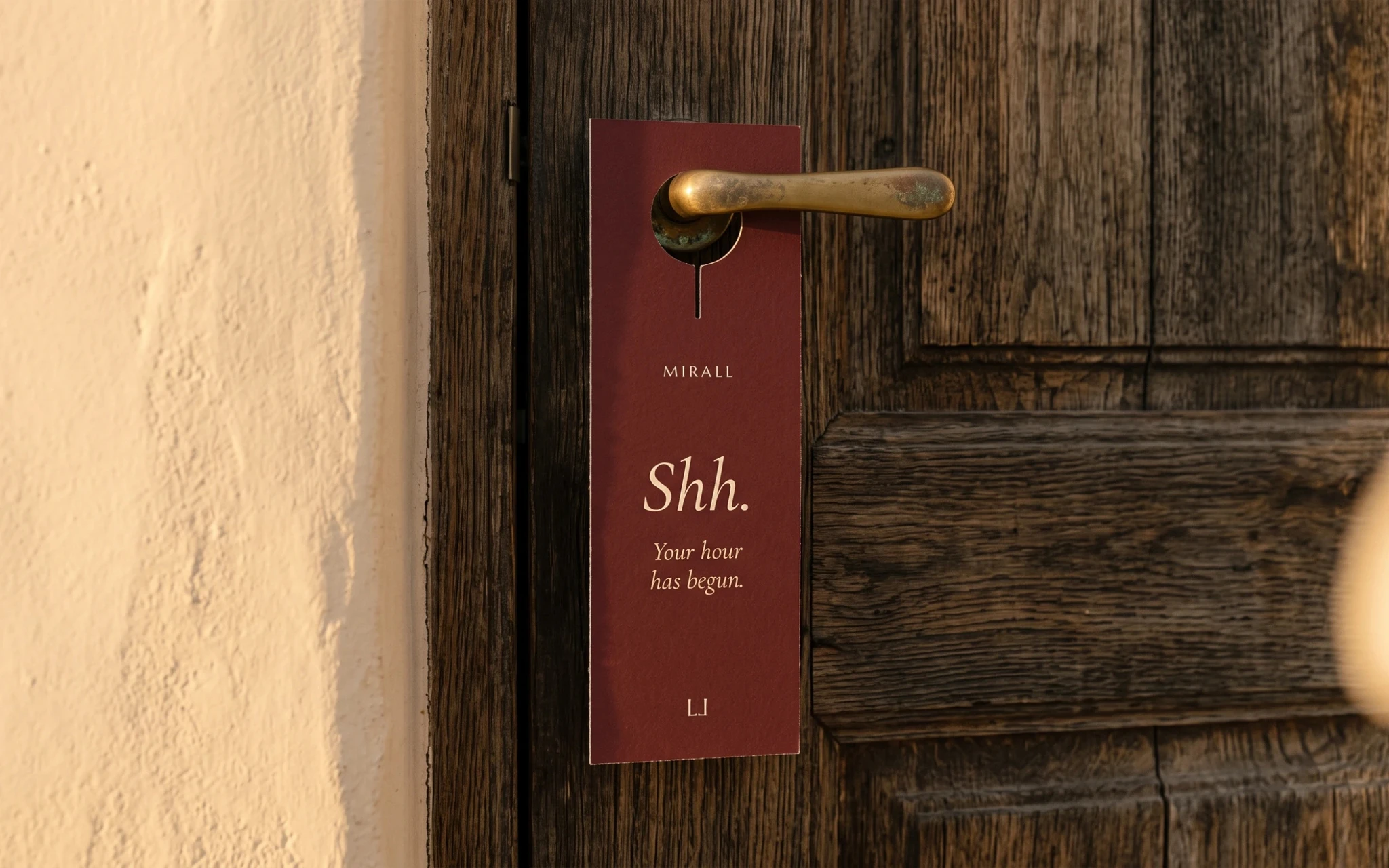
That's why people back from Mirall talk less about the view than about the note, the hour and the quiet.
The difference shows up in the day-to-day running of the business, not just in how things look.
The first thing is that you stop competing on price alone. Once guests understand what makes you different, they stop comparing you with the hotel next door over a few euros. They choose you because they want what you offer.
Who shows up changes too. A clear brand draws exactly the people looking for what you do. And guests who find what they expected leave better reviews, come back and send their friends.
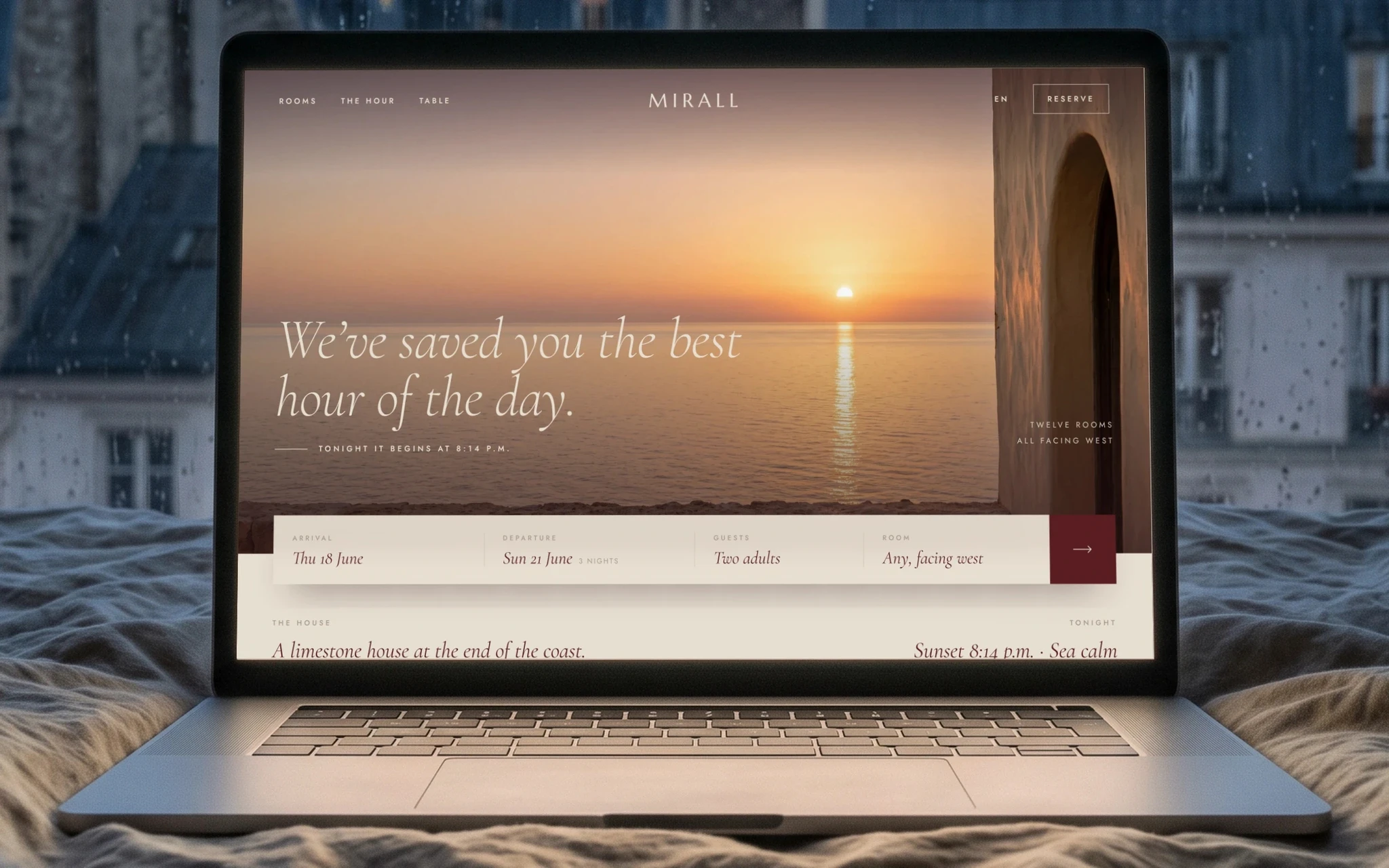
On top of that, everything you do starts to add up. Every post, photo and email reinforces the same idea instead of starting from scratch, so whatever you put into marketing goes a lot further.
And there's something people tend to underrate: your team knows how to talk, what to watch out for and what to say no to. The brand becomes part of how everyone works.
An identity like this doesn't happen in an afternoon. You have to look at the business calmly, find the idea and carry it all the way to the last detail, from the logo to the scent of the lobby. That's what we do at Rielto House.
Your logo is the face of your brand: the mark that sums it up and makes it recognizable. Your brand identity is the whole thing: the idea, the colors, the type, the voice, the photos, the senses and the details. The logo is its most visible part, but it needs the rest to tell people who you are.
Yes, maybe even more than a big one. A small hotel can't compete on size or ad budget, so what gets it chosen is a clear personality. And it doesn't have to be complicated. It just has to be consistent.
When it no longer says who you are: if the hotel has changed, if your guests are different, or if each piece was made at a different time and they no longer fit together. A logo that's been around for years isn't a problem as long as it still says the right thing.
Your logo matters a lot: it's what people recognize and remember. But guests decide based on everything around it: what they see, what they read and what they sense about the stay before they book. A well-built brand identity makes all of it tell the same story, from your website to the note waiting in the room. That consistency is what gets you chosen, brings guests back and makes them remember you.

If you'd like, we'll go through it with you piece by piece, from the big idea to the smallest details.
Private consultation