Brand & Identity · Wendy · 8 min
A lot of agencies are convinced that what they need is a new website with online booking. It almost never is. Why that is, and what it takes for a client to pick you.
If you run a travel agency, chances are you've thought it at least once: “If we had a great website with online booking, we'd sell more.” It makes sense. People book almost everything online these days, so it feels like that's the only thing missing: being there, with a search box and a “pay now” button. I hear it all the time whenever travel agency marketing comes up.
But a booking website doesn't sell on its own. You can have a beautiful site without a single glitch and still get very few visitors. And of those few, hardly anyone books. That's not the website's fault: we're asking it to do a job it can't do alone. At the end, there are a few questions to help you look at your own situation before you spend money on another site.
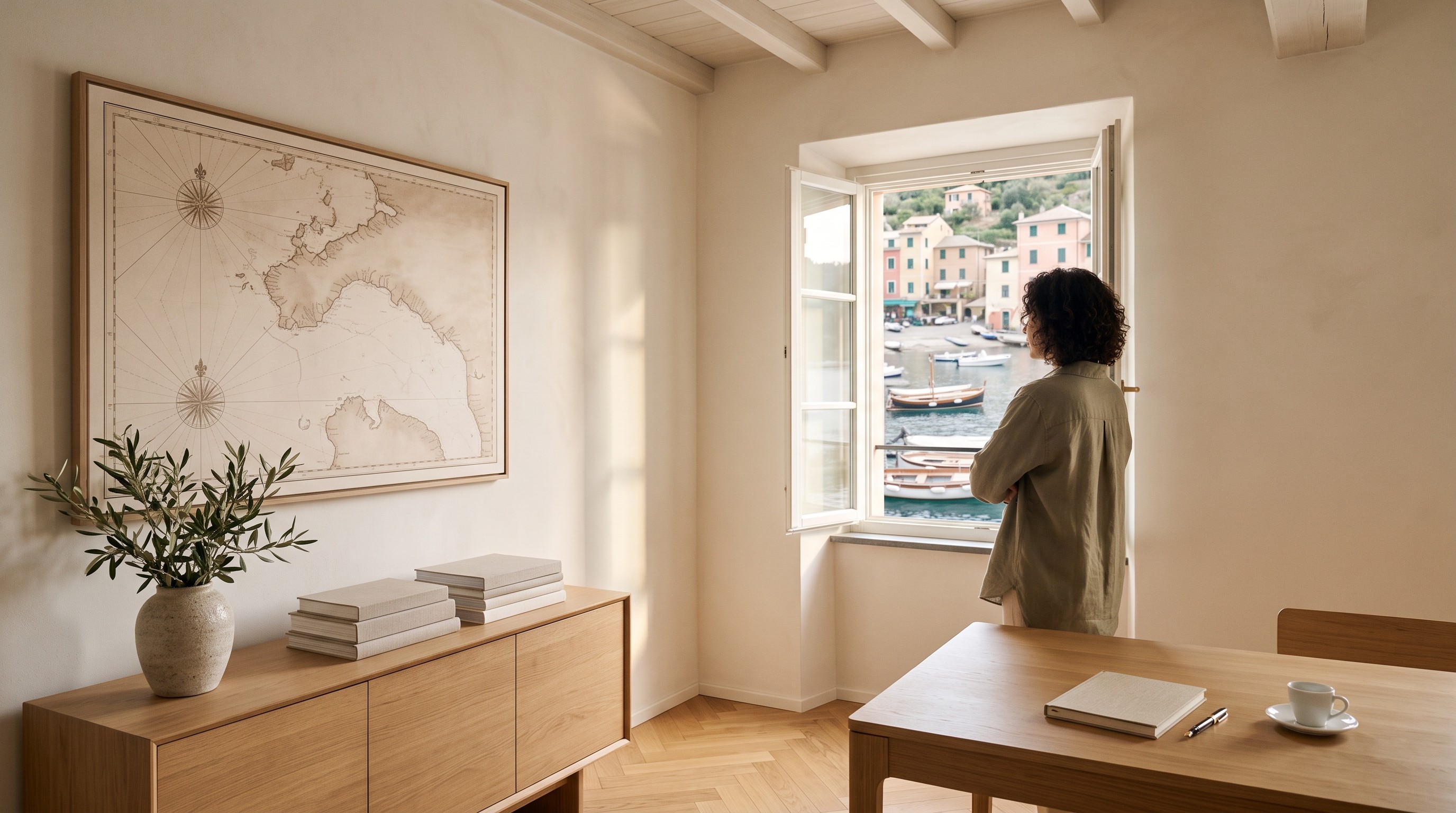
Think of a shop window. It can be the prettiest one on the street, but if nobody walks down that street, it doesn't do much. And the people who do walk by need to see something that makes them want to come in. A website works exactly the same way.
For an agency, there's one more thing. If you put a flight and hotel search on your site, you're stepping onto the big booking platforms' turf. They have more inventory, a lot more money for advertising, and years of customers used to booking with them. Beating them there is close to impossible. The good news is you don't have to: someone hunting for the cheapest hotel already knows where to look, and that's not the client you want anyway.
So here's the question I'd ask instead: why would anyone book with me rather than do it themselves?
When someone walks into an agency, or sends you an email, they're looking for someone who knows their stuff. And they expect things from you that a platform simply can't offer:
Telling them which island suits them in September, which hotel is worth it (and which isn't), and what order to do the trip in so they don't lose a whole day to transfers.
An agency that knows one destination or one kind of traveler inside out is worth far more than one that sells a little of everything.
Someone who picks up when something goes wrong, remembers them next time, and makes them feel looked after for the whole trip.
That's what you're really selling, and none of it shows up in a search box with a “book” button.
If your website looks like a booking platform's, you're telling clients you're the same thing, just smaller.
For all of that to come through, your website has to be part of something bigger. These are the things that need to work together:
A logo is only part of it. It starts with knowing exactly what kind of trips you do and who they're for. It should come through in your name, your colors, the way you write and every document a client receives. That's what makes people remember you.
Social media, content, a well-kept Google profile, partnerships, word of mouth. It's the street people walk down before they reach your window. Without it, your site just sits there waiting for visitors who never come.
Share what you know well: the places you've seen for yourself, the trips you've put together, the little details only someone who's been there would know. That way clients see your specialty before they've even reached out.
Everything a client gets when they book, while they're traveling and once they're back home. It's what brings them back and gets them talking about you, and for an agency that's worth more than any ad.
The place where everything else comes together. Where clients see you're exactly who they hoped you'd be, and where taking the next step is easy: booking, asking for a proposal or just getting in touch.
None of these work well on their own. A gorgeous identity nobody sees won't get you far, and neither will a busy Instagram that sends people to a confusing website.
Estela is a travel agency whose brand we created at Rielto House. The starting idea is very simple: every trip leaves a wake, like a boat moving through water. So for every client, Estela draws the actual line of their journey, with the coordinates of each stop.
What I love is that the idea doesn't stop at the logo. You'll find it in the welcome box that arrives when you book, in the notebook with your itinerary, on the luggage tag and in the app clients use during the trip. And when they get home, they receive a framed print of their trip's wake to hang on the wall. The app matters, of course, but it's only one part of the story.
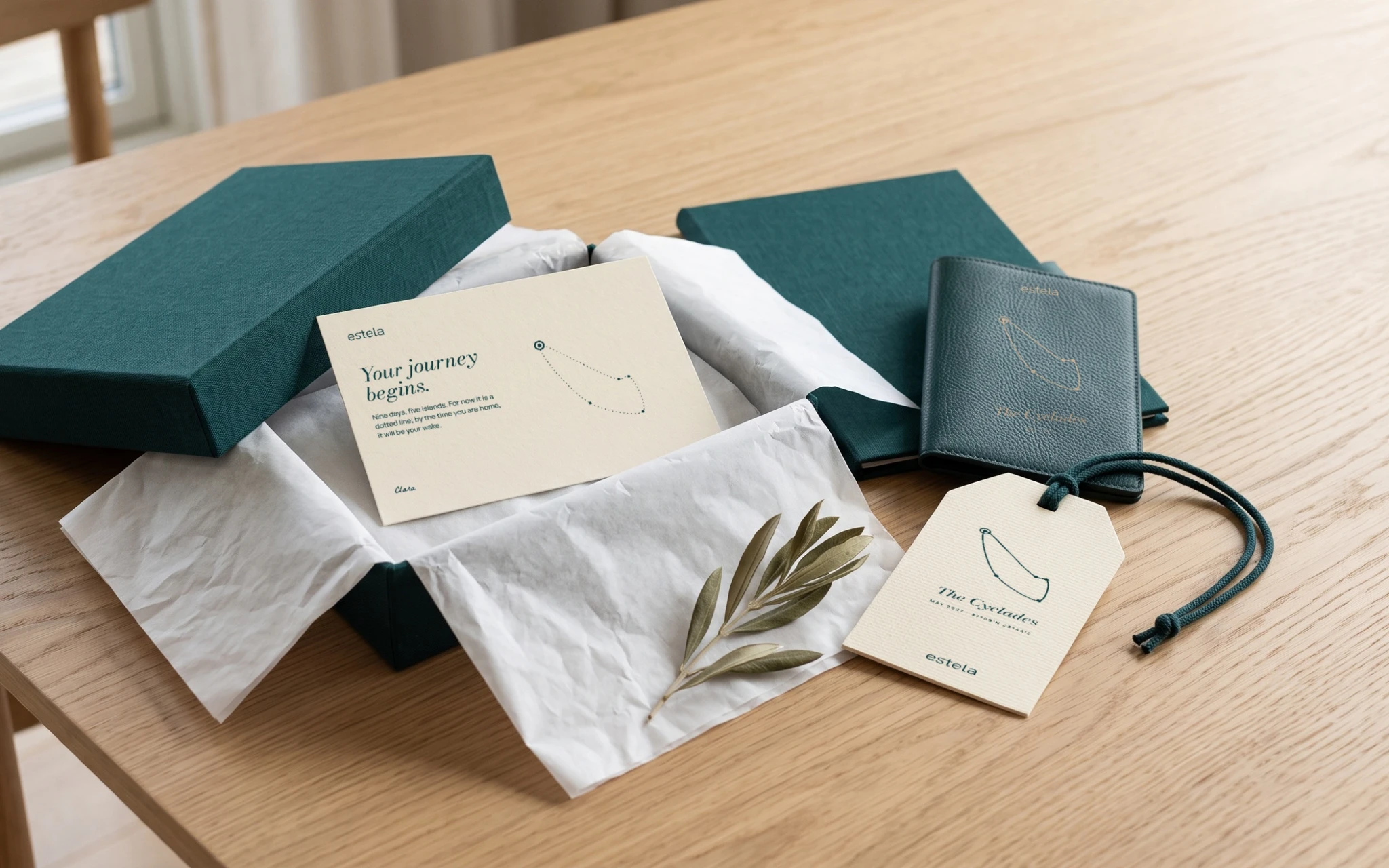
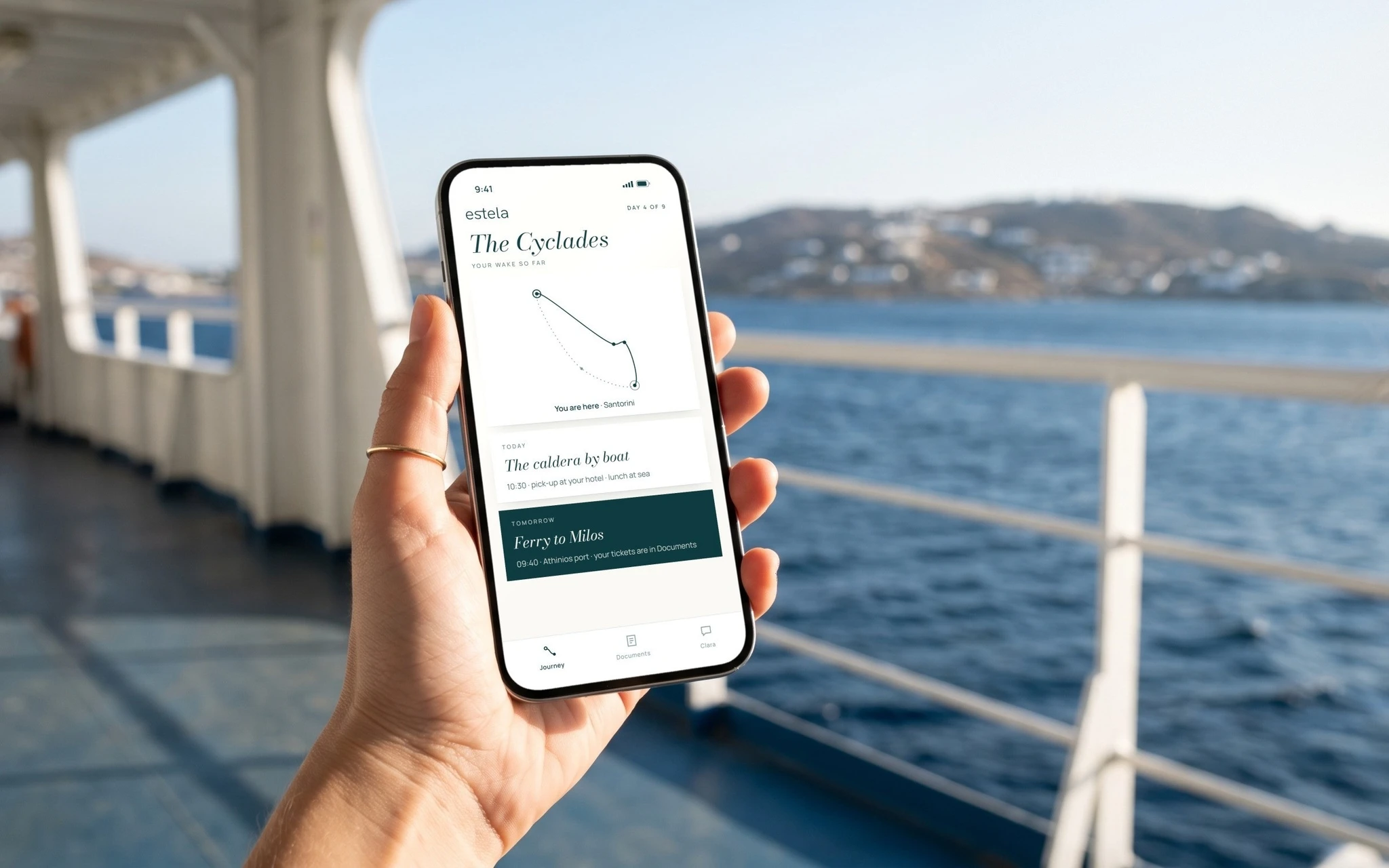
When clients come back, they talk about Estela by name. And when a friend asks how the trip went, they have something to show them, right there on the wall.
If those questions showed you that more than one piece is missing, don't panic: you don't have to do everything at once. What matters is starting with the foundation, which means being clear about what kind of trips you do and who they're for, and then building the rest on top of it, in order and around the same idea.
That's exactly how we work at Rielto House. When an agency comes to us thinking about a new website, we start with everything around it: the identity, the way it tells its story, how people are going to find it. The website comes after, and that's when it really does its job, because it has something to say and someone to say it to.
It depends on what you sell. If you plan custom trips, a simple form to request a proposal often works better than a search engine. If you sell ready-made packages, online booking can definitely help. Either way, a website works when it's part of a strategy.
By not playing their game. They win on inventory and price. You can win on expertise, specialty and care, as long as your marketing makes them visible.
With getting clear on your idea: what you do, who it's for and why people should choose you. Once that's clear, whatever you invest in your website, social media or content pushes in the same direction.
A booking website is a tool, and on its own it won't work miracles. An agency sells when clients see what makes it different wherever they come across it: what it knows and how it takes care of people. When your identity, social media, content, experience and website all point the same way, your website finally does its job. That's why they need to be planned together. Done separately, and I'm convinced of this, they just don't work.

If you'd like, we'll look at it together and see what's missing: identity, presence and website, as one project.
Private consultation