
Brand & Identity · Wendy · 8 min

More and more people ask ChatGPT or Google to recommend a hotel, and they get an answer instead of a list of links. How those answers come together, and what you can and can't control.
Not long ago, finding a hotel meant opening Google, scanning ten links and comparing. Today more and more people type something like “a quiet hotel near Siena with a pool and great food, for our anniversary” and get an answer back: three or four names, with a couple of lines on each. They do it in ChatGPT, in Gemini, or right in Google, which for many searches now puts an AI-written summary above the results.
I hear it more and more when I talk to hoteliers: “So how do I show up there?” It's a fair question, and there's a lot of noise around it, plus a few strange promises. So let's keep it down to earth: much of what matters is something you can check this week.
Classic search gave you a shot even if you were on page two. An AI answer names very few. Making it into those three lines matters a lot more than it used to.
But there's another shift, and this one works in your favor. Travelers no longer type “hotel Siena.” They describe what they want, in detail. They're bringing the dog, they want quiet, they want a good dinner without getting in the car. The more specific the question, the more your differences matter, and the less your size or ad budget does.
Hotels used to compete for a spot on a list. Now they compete for a line in an answer.
There's no secret database. These tools read what's published about you and sum it up. Mostly, they look in three places:
What you say about yourself, in words: what kind of place you are, where you are, what a stay feels like. If it's all photos and generic lines, there's not much to work with.
Details, amenities, hours and, above all, what your guests write, because they describe your hotel in the same words people use when they ask.
Booking sites, guides, magazines, travel blogs. The more places tell the same story about you, the clearer it is who you are.
If what it finds is thin, contradictory or vague, the answer will be too. Or it'll simply name someone else.
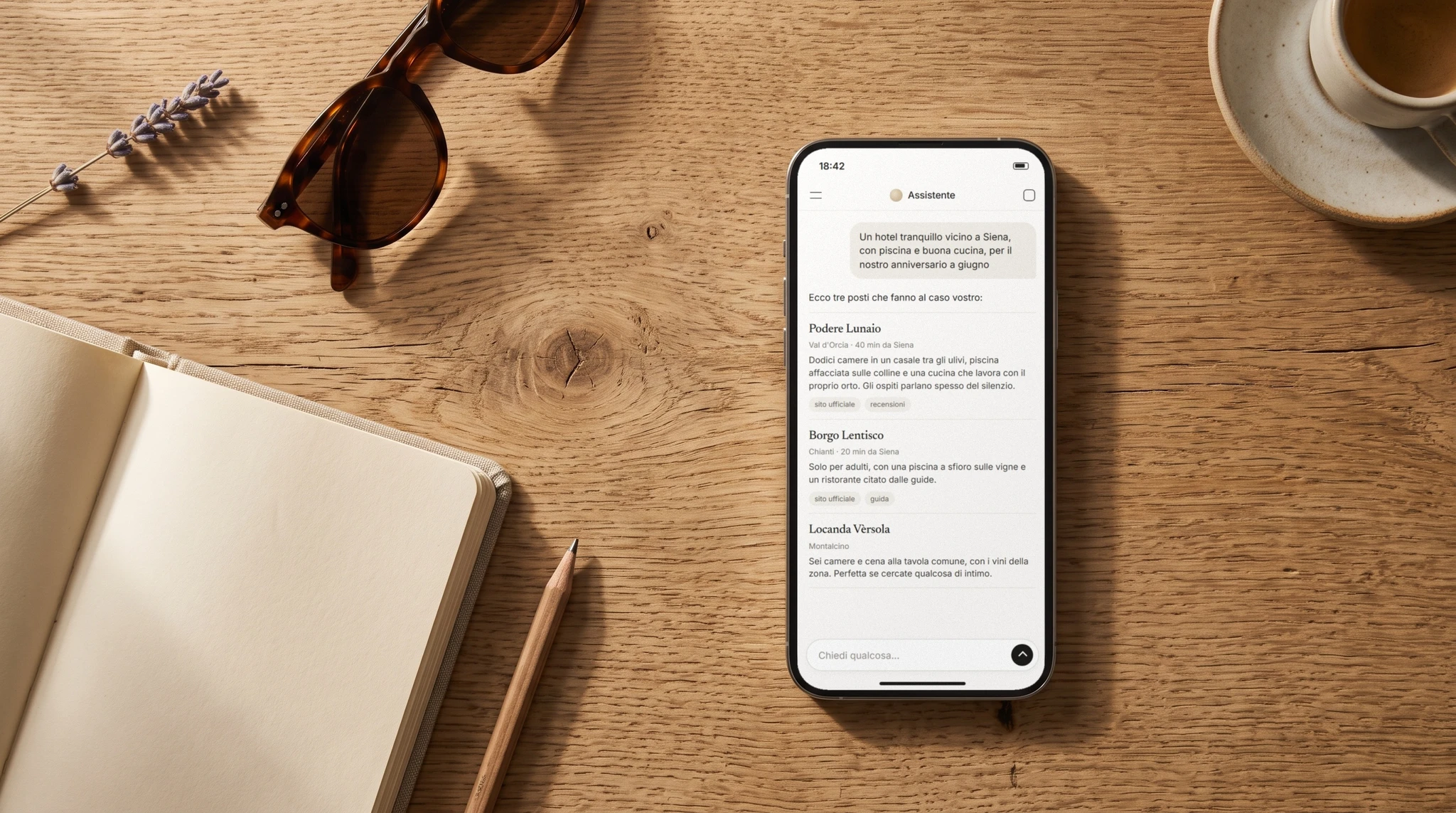
It's worth being clear here, because plenty of shortcuts are for sale. Google spells it out in its guidance for site owners: there are no special requirements or extra optimizations to appear in its AI features. The usual fundamentals apply: your site can be crawled and indexed, the important things are written as text and not locked inside an image, your structured data matches what's visible on the page, and your business profile is up to date.
ChatGPT works in a similar way. To search the web it uses its own crawler, and if your site blocks it, it can't cite you. It's one line in a technical file, and more than one site has it set wrong without anyone knowing.
So if someone offers to “rank you on ChatGPT” with a secret formula, be skeptical. What works is less flashy and a lot more solid: making it easy to understand who you are, on your site and everywhere else.
These are the things I'd check first at any hotel:
A machine can't feel the mood of your photos. If you're a hotel for unplugging, adults only, with a kitchen garden, a ten-minute walk from the sea, say it in exactly those words. Travelers' questions are that specific, and your site should be too.
Rooms, the restaurant, getting here, things to do nearby, the questions you get all the time. Each page answers something someone might ask.
Name, address, phone number and amenities, identical on your site, on Google and on booking sites. Contradictions confuse people, and machines even more.
A fast site that reads cleanly, with hotel structured data set up properly, and no blocking the crawlers you want.
Ask guests to share how their stay went, and reply, including to criticism. It's the closest thing to how people talk when they ask.
None of this takes anything away from emotion: once travelers land on your site, what wins them over is still the feel of the place. Wendy covers that beautifully in her piece on hotel websites, and I wrote about it in the one on photography that makes people want to go. Here I'm taking on the other half: making sure that same site makes sense when a machine reads it.
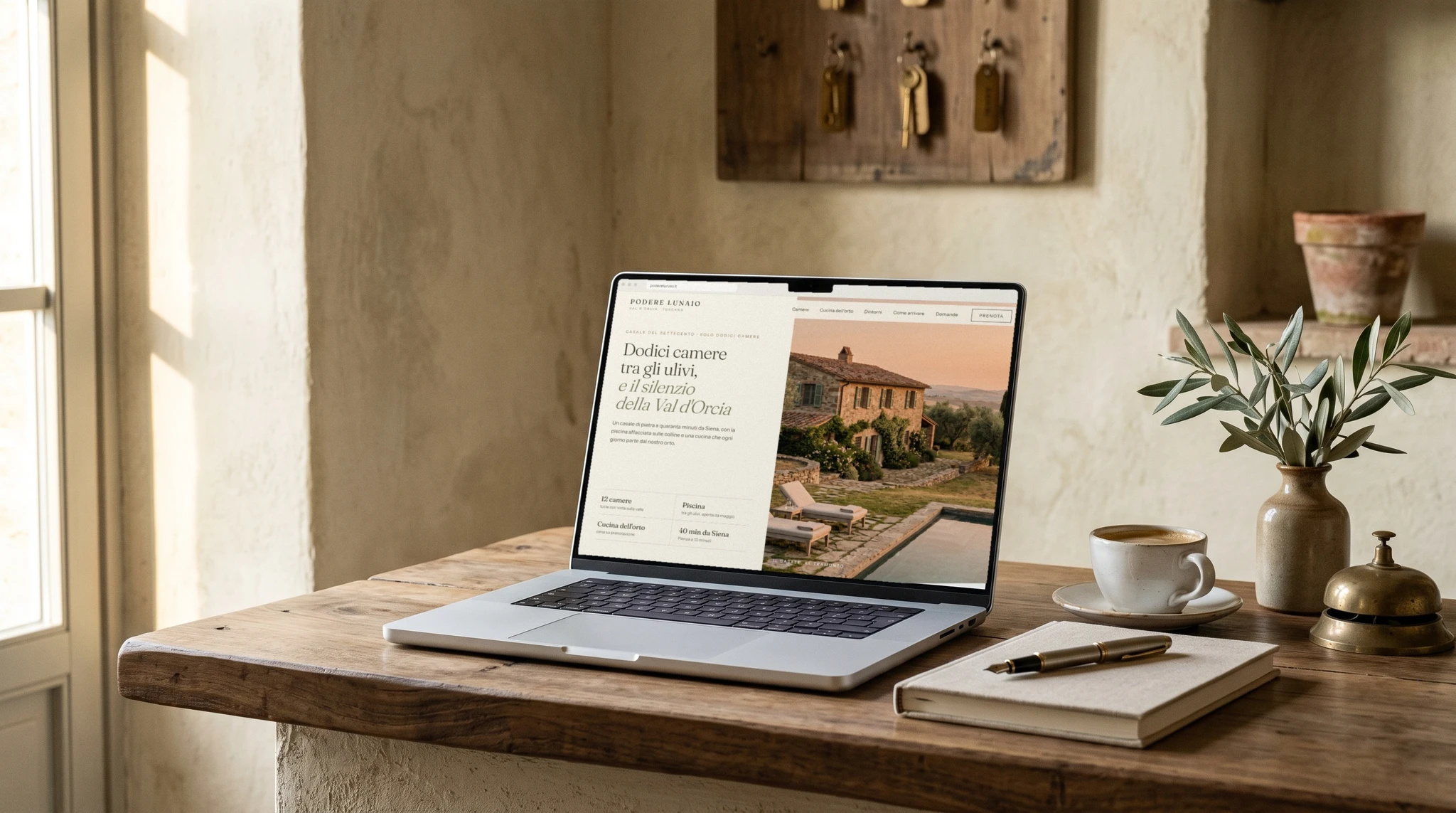

When AI has a clear picture of who you are, it recommends you to people looking for exactly what you offer. They land on your site with a pretty precise idea of what they'll find, book with fewer doubts and, when they arrive, find what they expected. That's the guest who comes back and talks you up.
And the effort doesn't stop there. What you do so a machine understands you is the same thing that helps Google, booking sites and anyone who lands on your site in a hurry. In practice, it's about getting your hotel's story straight, without adding another channel to manage. And small hotels have a real edge here: an answer favors whoever fits the question best, whatever they spend on ads.
At Rielto House we work on it from both sides at once, the technical one and the brand one: a fast, well-built site with its details in order, and a way of telling the hotel's story so clear and so unmistakably its own that anyone, person or machine, can explain it.
They're AI-written summaries Google shows above the results for some searches, with links to the pages the information comes from. Google also has AI Mode, a way of searching by having a conversation, one question after another.
That's the name for shaping content so AI understands and cites it. In practice, it's mostly good SEO and good communication: clarity, consistent details and useful content. Be wary of anyone selling it as something separate and mysterious.
Recommendations are based on what the tool finds published and considers reliable. Where there are ads, they're separate and labeled as such. What gets you into the answer is how well you're described.
Sometimes they land on your site, sometimes on a booking platform. That's why your site should be the most complete, reliable source on your hotel, and booking direct should be easy.
If your guests come from abroad, yes. People ask in their own language, and having your hotel well described in your guests' languages helps the answer include you, and helps them feel welcome the moment they arrive.
More and more travelers ask AI to recommend a hotel, and those answers name very few. There's no trick to getting in: AI sums up what's published about you, on your site, your Google profile, reviews and booking sites. The clearer, more consistent and more specific all of that is, the easier it is for it to recommend you to the people who are truly a good fit.

If you'd like, we'll look at it together and see what your website needs to be clearly understood.
Private consultation